
Can You Swim With a Vostok Amphibia? Water Resistance Explained
Learn what 200m / 20 ATM water resistance really means,
whether Amphibia is safe for swimming, snorkeling and diving, and how to protect your watch.
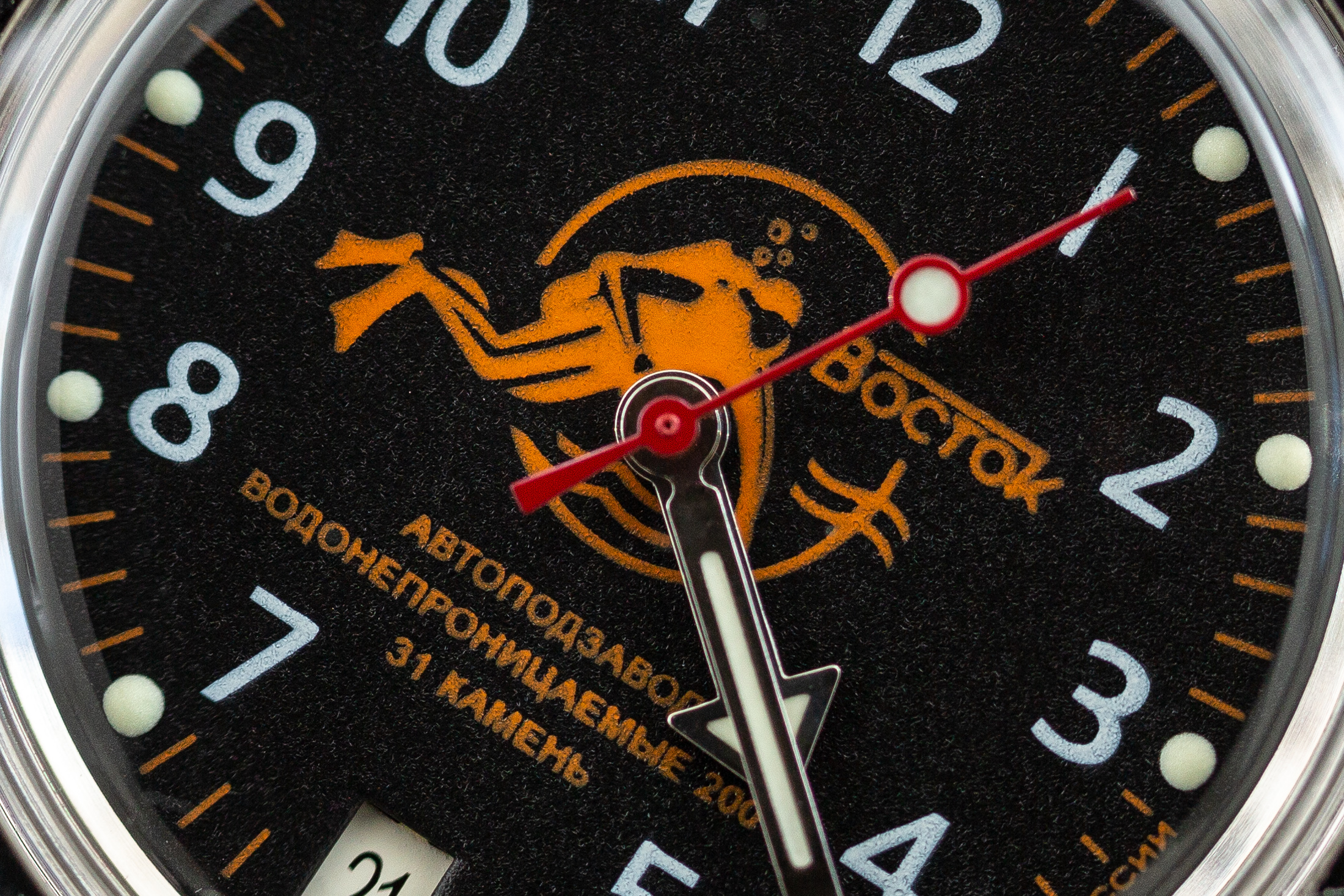
Yes — the Vostok Amphibia is designed for use in water. But there is an important detail that is often misunderstood when people see “200 m” on a watch. Does 200 meters mean you can simply take the watch to a depth of 200 meters?
Not necessarily.
Water-resistance ratings are more complicated than they first appear. And with the Vostok Amphibia, understanding how the watch was engineered makes the answer much more interesting.
Is the Vostok Amphibia waterproof?
The short answer is: it is water-resistant, not permanently waterproof.
No mechanical watch should be considered permanently waterproof. Water resistance depends on the condition of the case, crystal, gaskets, crown and case back. Rubber seals can age, become damaged or lose their original properties over time. A new or properly maintained Amphibia is designed for serious exposure to water. But like any mechanical dive watch, it needs to be treated as a piece of precision equipment rather than an indestructible object.
The more useful question is therefore:
What kind of water exposure is the Vostok Amphibia designed to handle?
For a 200 m Amphibia, the answer includes everyday water exposure, swimming, snorkeling and recreational diving.
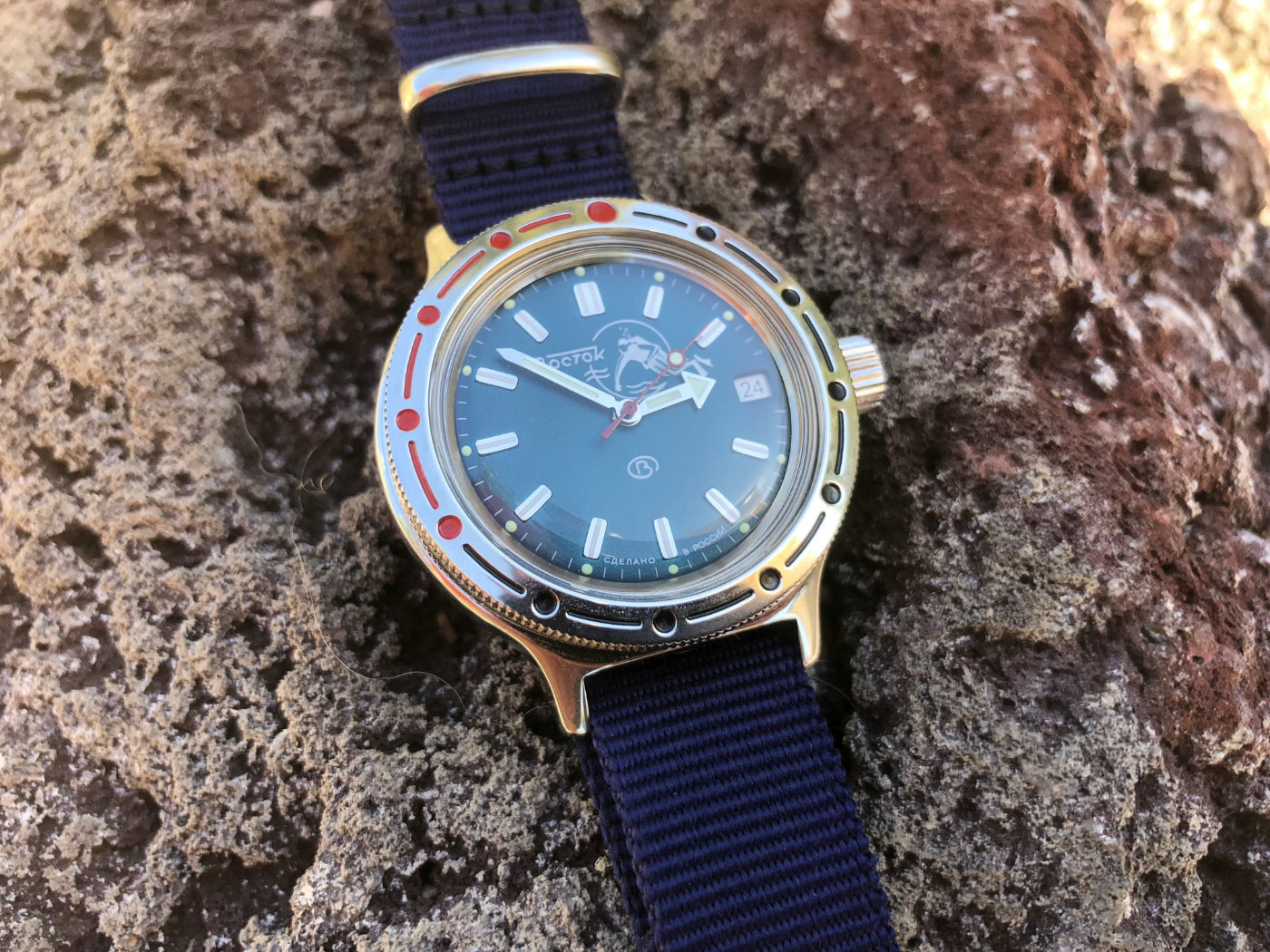
What does “200 meters / 20 ATM” mean?
You will often see Amphibia specifications written as:
Water resistance: 200 m / 20 ATM
These two numbers describe the same basic pressure rating in different units.
20 ATM means a pressure equivalent to approximately 20 atmospheres. In simplified terms, the hydrostatic pressure of water increases as you go deeper. At approximately 200 meters, the water pressure is in the range represented by this rating.
But there is an important distinction: a 200 m rating is not simply a promise that you can dive to 200 meters. Water-resistance testing is performed under controlled conditions. Real life is different. A watch on a swimmer’s wrist is exposed not only to static water pressure but also to movement, impacts, temperature changes and sudden changes in pressure.
That is why the depth number should be understood as a water-resistance rating, not as a recommended recreational diving depth.
So, can you swim with a Vostok Amphibia?
Yes.
Swimming is exactly the kind of activity for which the Amphibia’s water resistance is useful.
The current VostokAmphibia product descriptions explicitly state that Amphibia models are suitable for swimming, snorkeling and recreational diving. This makes the Amphibia fundamentally different from an ordinary dress watch that happens to have some degree of water resistance.
The Amphibia was created specifically around the problem of keeping a mechanical watch sealed under significant water pressure. So if you are going to the pool, beach or lake, a properly functioning Amphibia is designed to handle that environment.
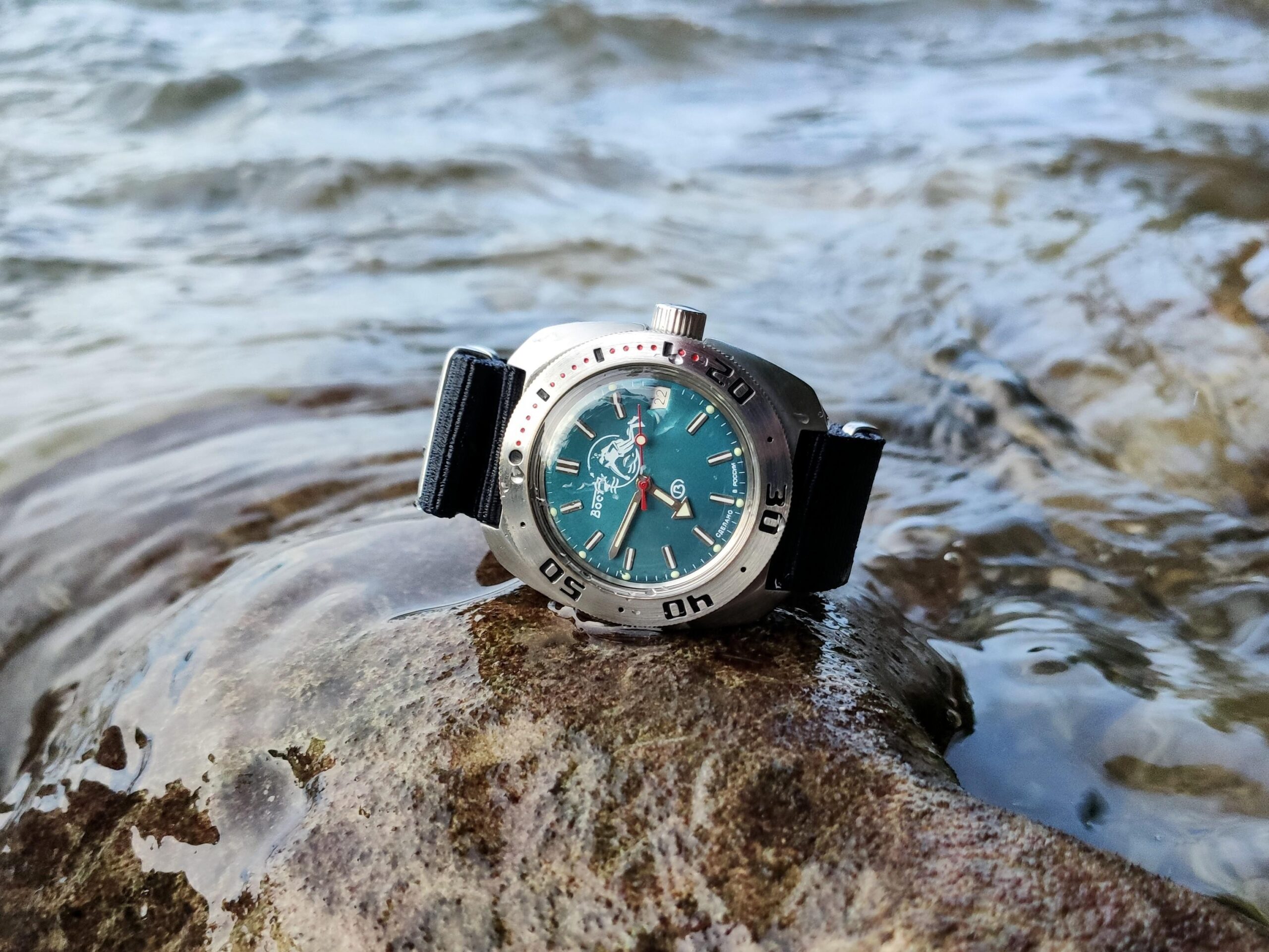
Can you swim in the ocean with a Vostok Amphibia?
Yes.
Salt water itself is not a reason to avoid swimming with a properly functioning Amphibia. However, salt and sand can be hard on a watch. After swimming in the sea, it is sensible to rinse the watch with clean fresh water and dry it thoroughly. This is especially useful around the bezel, crown and bracelet, where salt crystals and sand can accumulate.
A simple routine after swimming in the sea:
- Rinse the watch with fresh water.
- Remove any visible salt or sand.
- Dry the case and bracelet.
- Avoid manipulating the crown while the watch is wet.
- Check that the crown is in its normal secured position before entering the water again.
A few seconds of care after every swim can help prevent unnecessary wear and corrosion.
Can you wear a Vostok Amphibia in the pool?
Yes.
A 200 m Amphibia is designed for water exposure well beyond the level encountered during normal swimming.
Swimming pools, however, introduce another consideration: chlorinated water.
Chlorine can affect certain materials over time, particularly rubber components and some finishes. That does not mean you should avoid taking an Amphibia into a swimming pool. It simply means that rinsing the watch with clean water afterward is good practice. If the watch is regularly exposed to pool water, salt water or other harsh environments, periodic inspection and maintenance become more important.
Can you snorkel with a Vostok Amphibia?
Yes.
Snorkeling is one of the most natural uses for a 200 m Amphibia. Unlike simply wearing a watch while washing your hands, snorkeling involves continuous exposure to water and changes in depth. The Amphibia’s construction was designed for exactly this kind of environment.
The current VostokAmphibia product range specifically describes 200 m Amphibia models as suitable for snorkeling. The rotating bezel is also useful here.
Before entering the water, the diver can align the bezel marker with the minute hand and use it as a simple elapsed-time reference.
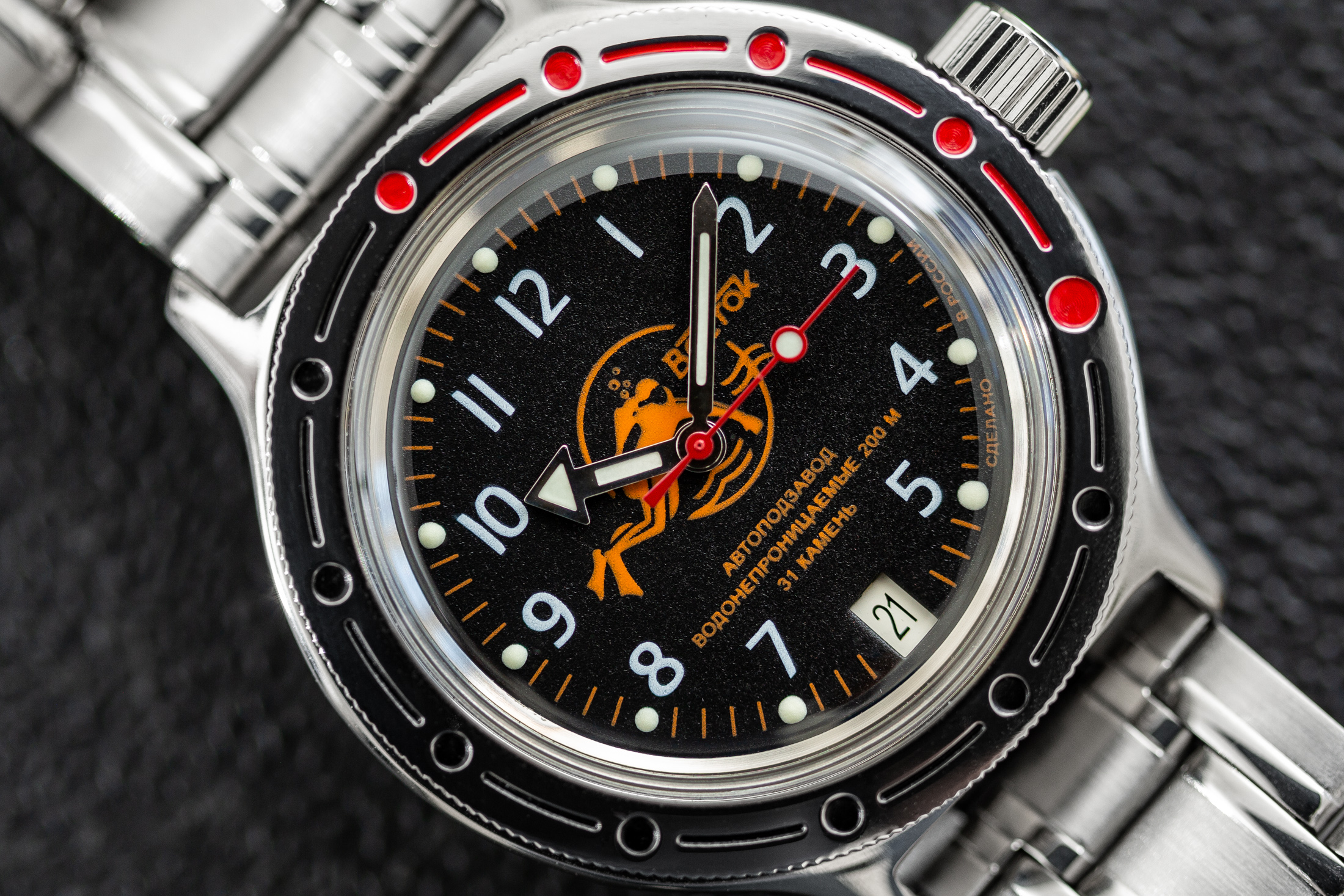
Why is the Vostok Amphibia so water-resistant?
This is where the Amphibia becomes particularly interesting. The watch’s water resistance does not come from one unusually thick piece of metal. It comes from the way several components work together. The original Amphibia engineers had to rethink almost every important part of the case.
The Amphibia crystal is part of the sealing system
One of the most unusual features of the Amphibia is its crystal.
At first glance, it looks like a normal watch crystal. But it has a specially designed profile. Under pressure, the crystal can deform slightly. The original designers explained that at high pressure the crystal could bend by approximately 0.5 mm. That deformation is important.
Instead of simply treating pressure as something that the watch has to resist, the Amphibia’s construction uses pressure to help the crystal maintain the seal against the case. This was one of the key ideas behind the original Amphibia design.
The crystal was also thicker than the one used in the ordinary Komandirskie watches of the period. The original engineering work therefore involved much more than simply choosing thicker glass. The shape, dimensions, manufacturing accuracy and interaction with the case were all important.
The gasket matters just as much
Another critical component is the rubber gasket.
Rubber may seem like a simple material, but a gasket used in a high-pressure mechanical watch has demanding requirements.
The Amphibia engineers needed a material that could:
- seal the case under pressure;
- withstand repeated compression;
- recover its shape;
- tolerate temperature changes;
- remain smooth and free from defects;
- maintain its properties over time.
The original designers even experimented with specialized treatments while developing the material. The point is important because it explains why water resistance is never simply a matter of “having a thick case.” A watch can have a very strong metal case and still leak if its sealing surfaces or gaskets are compromised.
The stainless-steel case
The Amphibia was also notable for its stainless-steel case. Stainless steel offered greater durability and corrosion resistance than the brass cases commonly used for many watches of the period. But manufacturing the Amphibia case from steel presented its own challenges.
The material was harder to work with, and the engineers had difficulties producing the required case shape consistently. The lugs, for example, repeatedly broke during early manufacturing attempts.
The factory eventually developed new production methods to manufacture the case reliably. The result was a watch case that looked relatively simple but represented a considerable amount of engineering work.
The case back is part of the system
The Amphibia case back is another component designed with pressure in mind.
The original Amphibia used a substantially thicker back than ordinary watches, together with a reinforced fastening system. Modern Amphibia models continue to use solid stainless-steel case backs as part of their water-resistant construction.
Again, the important principle is that water resistance comes from the complete case construction, not from one isolated feature.
What about the crown?
The crown is one of the most important parts of any water-resistant mechanical watch.
Before swimming or diving, make sure the crown is fully in its normal operating position. Never operate the crown while the watch is underwater. Do not pull it out to change the time or date while swimming. Do not wind or manipulate it underwater.
Even a watch designed for serious diving should not have its crown deliberately opened while submerged. If you notice unusual looseness, damage or other problems with the crown, do not take the watch into the water until it has been checked.
What about vintage Vostok Amphibia watches?
Vintage Amphibias can be incredibly interesting.
But an old watch should not automatically be assumed to retain its original water resistance. A 40- or 50-year-old watch may still run perfectly while having compromised seals. This is one of the most important distinctions between mechanical reliability and water resistance.
A movement can continue keeping time even when the case is no longer properly sealed. So if you own a vintage Amphibia and want to take it swimming, have its water resistance checked first.
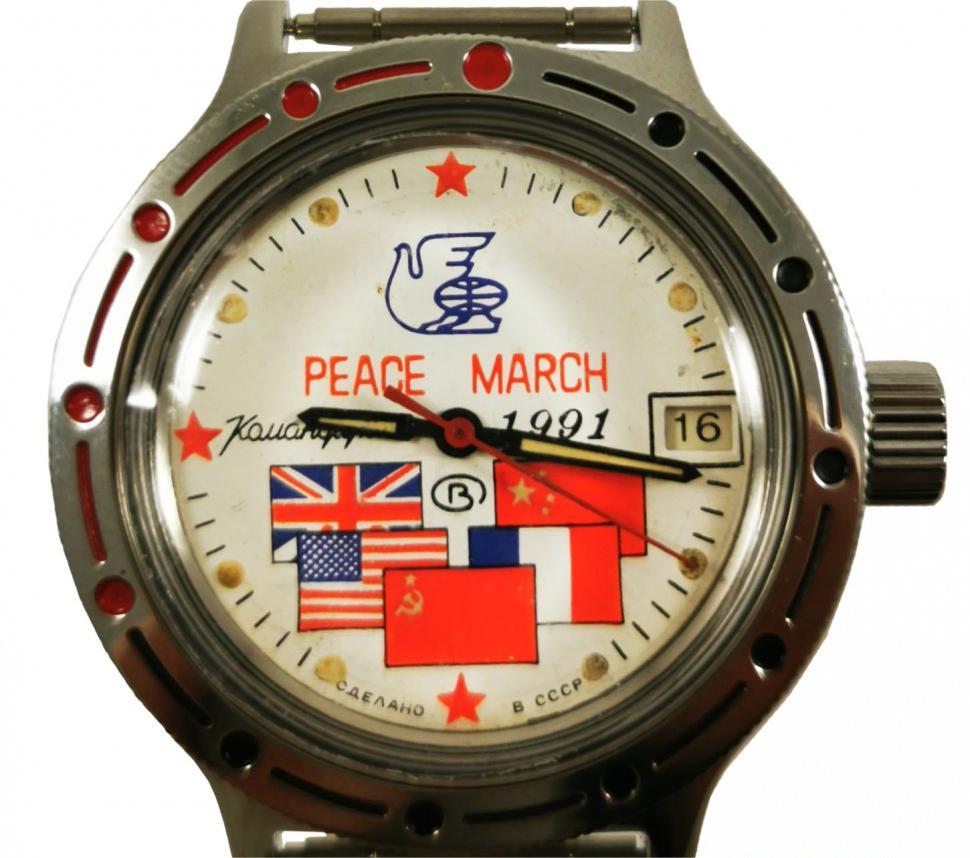
Does changing the strap affect water resistance?
Normally, simply changing a strap does not affect the water resistance of the watch.
You can therefore personalize your Amphibia with different straps without changing its case construction. However, make sure the spring bars are properly installed and secure. A water-resistant watch is not much use underwater if it falls off your wrist. For swimming or diving, a secure strap or bracelet is particularly important.
What if water gets inside the watch?
If you see condensation under the crystal, stop using the watch in water immediately. Condensation is a warning sign that moisture may have entered the case. Do not simply leave the watch in the sun and assume the problem has disappeared.
Water inside a mechanical watch can cause corrosion and damage to the movement. The correct response is to have the watch inspected and serviced as soon as possible.
Vostok Amphibia vs. ordinary water-resistant watches
There is an important difference between a watch that is merely designed to tolerate occasional water exposure and a watch that was created as a dive watch.
The Amphibia belongs to the second category.
Its history goes back to a specific engineering problem: creating a Soviet mechanical watch capable of reliable operation under high underwater pressure. The result was a construction involving a specially shaped crystal, purpose-designed gaskets, a reinforced case and other components engineered as a system. That is why the Amphibia remains interesting more than half a century after its original development.
Its water resistance is not simply a number printed on the dial. It is the central idea around which the watch was designed.
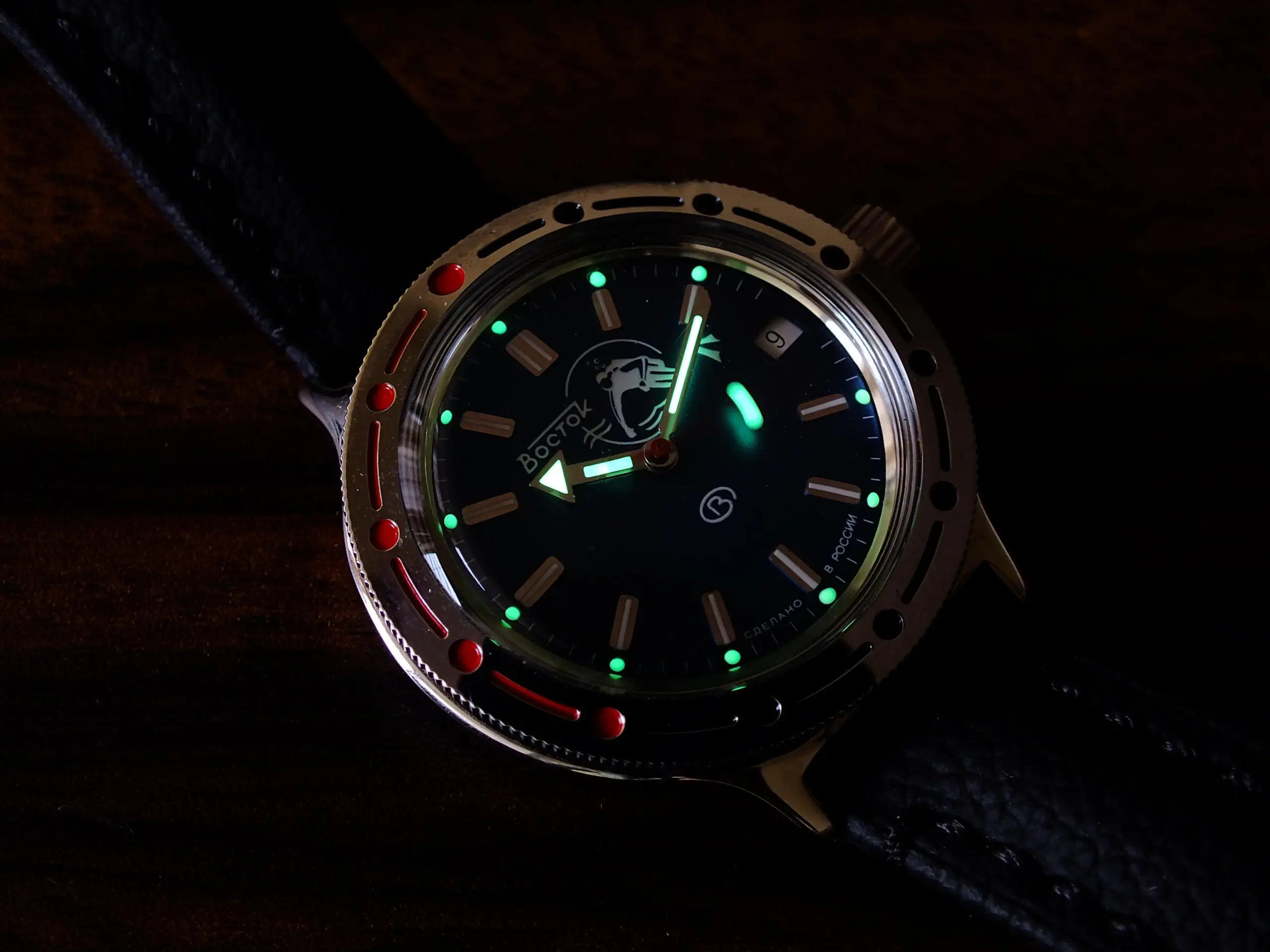
What can you do with a Vostok Amphibia?
Here’s the practical version.
| Activity | 200 m Amphibia |
|---|---|
| Washing hands | ✅ Yes |
| Rain | ✅ Yes |
| Swimming | ✅ Yes |
| Pool swimming | ✅ Yes |
| Ocean swimming | ✅ Yes |
| Snorkeling | ✅ Yes |
| Recreational diving | ✅ Yes |
| Showering | ⚠️ Better avoided when possible |
| Operating the crown underwater | ❌ No |
| Diving with a damaged/untested vintage watch | ❌ No |
| Deliberate high-impact water entry | ⚠️ Avoid |
The key assumption behind the table is that the watch is properly assembled, undamaged and maintaining its rated water resistance.
200 meters doesn’t mean “invincible”
This is perhaps the most important thing to remember.
The Vostok Amphibia is a rugged mechanical dive watch. It is not indestructible.
A 200 m rating does not protect the watch from:
- a damaged gasket;
- a cracked or damaged crystal;
- an improperly fitted case back;
- a damaged crown;
- an old seal;
- careless servicing;
- a loose strap;
- unnecessary impacts.
The best way to think about the Amphibia is:
Built for water, but still a mechanical instrument.
Treat it accordingly.
Ready to take your Amphibia into the water?
Explore our collection of Vostok Amphibia 200 m automatic dive watches, available in a wide range of cases, dials and strap configurations.